


Families referred to child welfare services often face complex challenges — but not all require the same response. Traditionally, child welfare has relied on a one-size-fits-all approach where every family eligible for intervention undergoes an investigation, regardless of the nature of their struggles. The Holistic Assessment & Response Pathways (HARP) model is changing that.
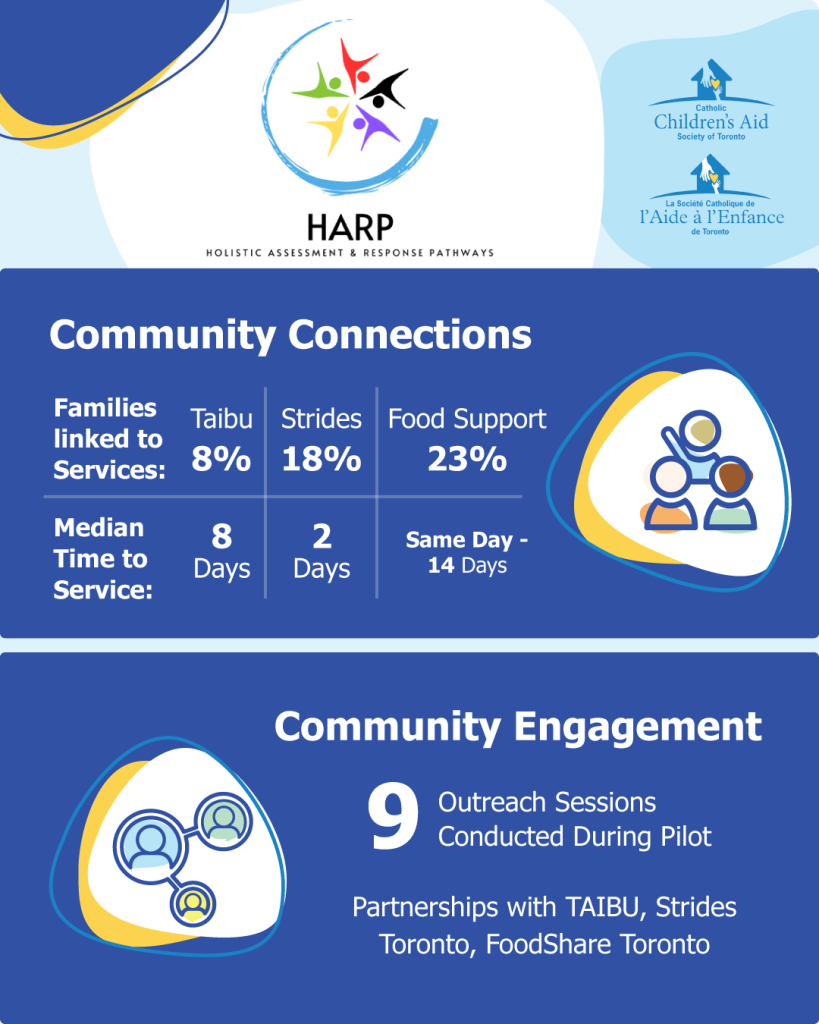
Launched in May 2024 and generously funded by the Catholic Children’s Aid Foundation, HARP was designed to provide a more compassionate, culturally safe, and trauma-informed approach for families whose needs stem from issues like poverty, unemployment, and mental health concerns — rather than severe harm to children.
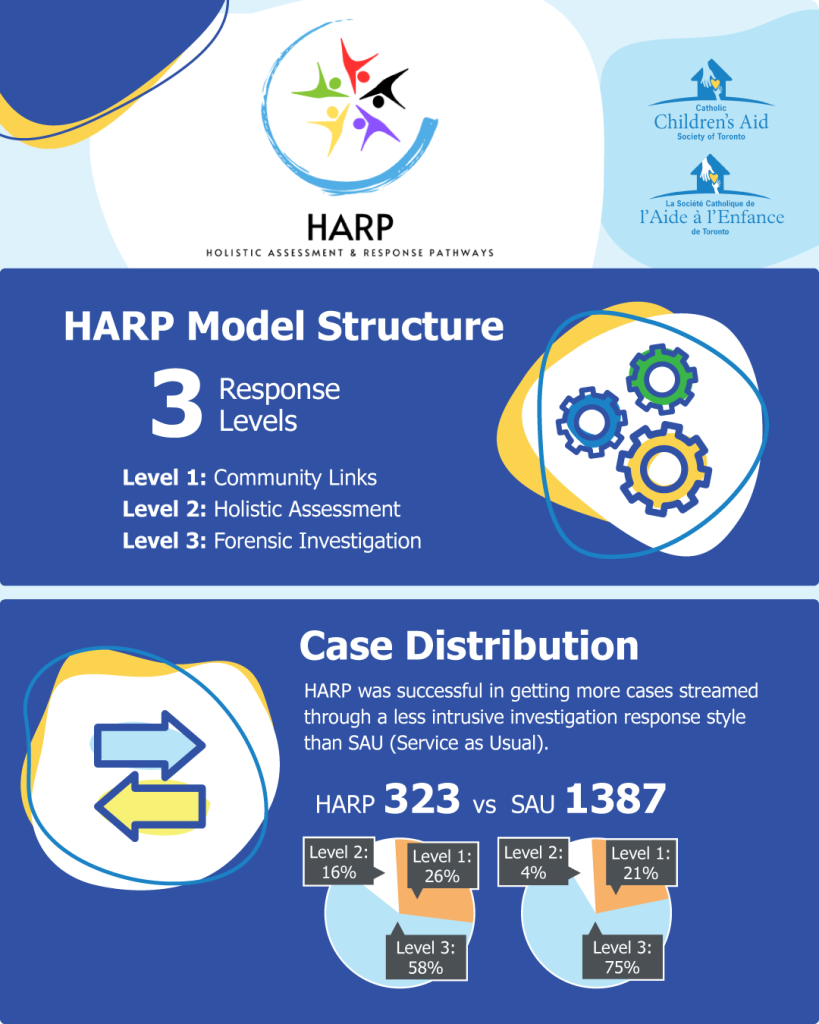
Research shows that while 15% of referrals require forensic investigation, the remaining 85% involve challenges that impact family well-being and child development. Families benefit most from support and connection to community resources. HARP was built with this in mind, offering thorough holistic assessments and timely service connections.
What We Learned in Year One
In its first year, HARP served 323 families referred to CCAS, and the results are promising:
- Just over half of HARP families were investigated (58%), compared to 75% of families receiving services as usual
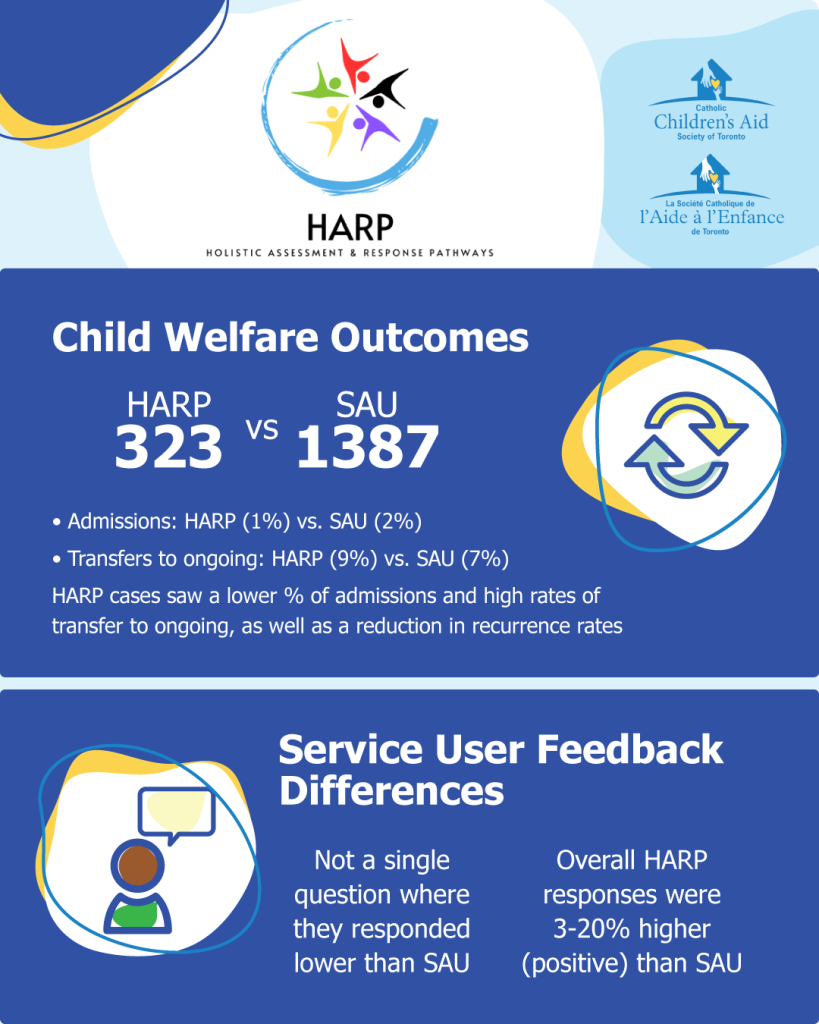
- CCAS admissions rates were already low but dropped even further as children admitted to care through the HARP model were admitted at half the rate of service as usual.
- Recurrence of protection concerns decreased by 40% compared to the traditional approach
These outcomes demonstrate that many families can be supported through an alternative response pathway — without compromising child safety.
What’s Next for HARP
Following a rigorous evaluation, refinements are underway, including clearer triage criteria and enhanced training for staff. Beginning January 2026, HARP will be scaled across the full Catholic Children’s Aid Society (CCAS) Intake Department, with ongoing evaluation to ensure continued success.
Here are a few highlights: